
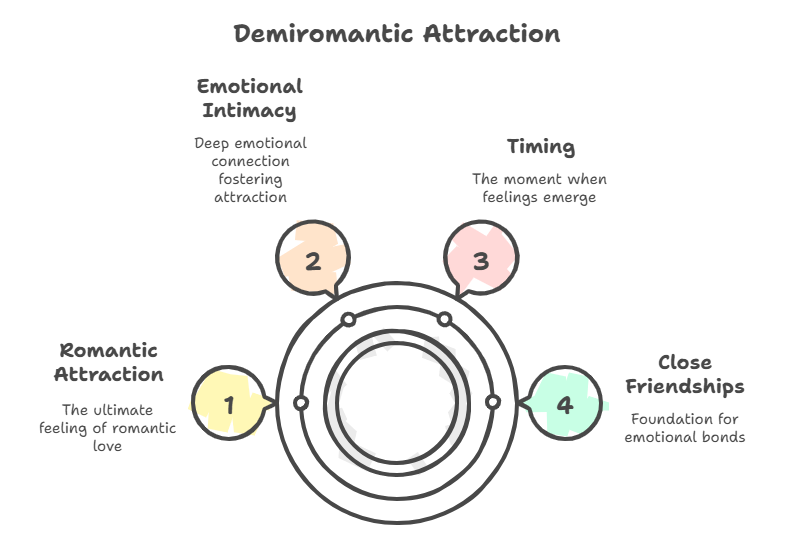
Empowering Identity what is demiromantic? In simple terms, a demiromantic person only experiences romantic attraction after forming a strong emotional bond with someone. Unlike the typical “love at first sight” narrative, demiromantics don’t feel those butterflies or sparks until a deep connection is established.
This isn’t about being shy or “slow to warm up.” It’s a distinct romantic orientation, just like being gay, straight, or bisexual. For many, learning about the demiromantic label is a huge relief. It explains why casual dating or instant crushes never quite made sense.
Demiromantic meaning is all about the timing and depth of romantic feelings. You might have close friendships for years before realizing you’re developing romantic feelings. Or, you might never feel romantic attraction at all unless that emotional intimacy is there.
The Demiromantic Flag: Colors, Symbolism, and Identity
If you’ve seen the demiromantic flag floating around social media or at Pride events, you might be curious about its colors and what they represent. The flag is a powerful symbol for the demiromantic community, offering visibility and a sense of belonging.
What Does the Demiromantic Flag Look Like?
The demiromantic flag features five horizontal stripes:
- Dark green (top): Represents aromanticism, as demiromantic is on the aromantic spectrum.
- Gray: Symbolizes gray-romantic and demiromantic identities.
- White: Stands for platonic and aesthetic attraction.
- Light gray: Represents the gray area between romantic and aromantic.
- Black (bottom): Reflects sexuality and the diversity of romantic experiences.
You can easily find a demiromantic flag PNG online if you want to use it for your profile, art, or social media.
Demiromantic vs. Other Romantic Orientations Empowering Identity
It’s easy to confuse demiromantic with other terms like demisexual or aromantic. Here’s a quick breakdown:
- Demiromantic: Needs a strong emotional bond before feeling romantic attraction.
- Demisexual: Needs a strong emotional bond before feeling sexual attraction.
- Aromantic: Experiences little or no romantic attraction at all.
You can be demiromantic and straight, gay, bisexual, pansexual, or any other sexual orientation. Romantic and sexual orientations are separate, though they can overlap.
Real-Life Example: “I Didn’t Know I Was Demiromantic Until My 20s”
Let’s bring this to life with a real story. Jamie, 27, shares:
“I always thought I was just picky or broken. My friends would talk about crushes and dating apps, but I never felt that instant spark. It wasn’t until I got really close to someone in college that I realized I could fall for them—but only after months of deep friendship. Finding out about the demiromantic label was like a lightbulb moment. I finally understood myself.”
Stories like Jamie’s are common. Many demiromantic people spend years feeling out of place before discovering the term that fits.
Signs You Might Be Demiromantic
Wondering if you might be demiromantic? Here are some common signs:
- You rarely (or never) develop crushes on strangers or acquaintances.
- Romantic feelings only appear after a deep, trusting friendship.
- You feel confused or pressured by the “dating game” or hookup culture.
- You value emotional intimacy far more than physical attraction.
- You’ve been called “picky” or “slow” in relationships.
Of course, everyone’s experience is unique. If these resonate, exploring the demiromantic label might help you understand yourself better.
The Demiromantic Experience in 2025: Community, Challenges, and Joys
Finding Community
Thanks to social media and online forums, it’s easier than ever to connect with other demiromantic people. Hashtags like #demiromantic and #demiromanticflag are thriving on platforms like TikTok, Instagram, and Reddit. There are even Discord servers and support groups dedicated to demiromantic experiences.
Common Challenges
Being demiromantic isn’t always easy. Some challenges include:
- Misunderstanding: Friends or partners may not “get it” and might think you’re just shy or commitment-phobic.
- Pressure: Society often expects quick romantic connections, which can feel alienating.
- Dating apps: Many are designed for instant attraction, making it tough for demiromantics to find matches.
The Joys of Being Demiromantic
But there are upsides, too! Demiromantic people often build incredibly strong, trusting relationships. When romance does develop, it’s deeply rooted in friendship and understanding. Many say their relationships feel more authentic and less rushed.
Demiromantic Flag PNG: Where to Find and How to Use
Looking for a demiromantic flag PNG? You’re not alone. Many people want to show pride in their identity, whether it’s on social media, in art, or at events.
You can find high-quality, free-to-use demiromantic flag PNGs on sites like Wikimedia Commons, LGBTQ+ resource hubs, and even Etsy for custom designs. Just make sure to check usage rights if you’re using it for commercial purposes.
Demiromantic Meaning: Myths and Misconceptions
Let’s clear up some common myths about the demiromantic meaning:
- Myth: Demiromantic people are just “late bloomers.”
- Fact: It’s a valid orientation, not a phase or delay.
- Myth: Demiromantics can’t have casual relationships.
- Fact: Some do, but they typically don’t feel romantic attraction without emotional closeness.
- Myth: Demiromantic is the same as demisexual.
- Fact: They’re related but distinct—one is about romance, the other about sexual attraction.
Understanding these differences helps create a more inclusive world for everyone.
How to Support a Demiromantic Friend or Partner
If someone you care about is demiromantic, here’s how you can support them:
- Listen: Let them explain their feelings in their own words.
- Be patient: Don’t rush romantic milestones.
- Respect boundaries: Everyone’s comfort level is different.
- Educate yourself: Read up on demiromantic experiences and challenges.
A little understanding goes a long way.
Demiromantic in Pop Culture and Media
Representation matters. While demiromantic characters are still rare in mainstream media, more creators are including nuanced, slow-burn romances that reflect demiromantic experiences. Webcomics, indie films, and even some TV shows are starting to explore these stories.
If you’re looking for relatable content, check out online communities or search for “demiromantic characters” in your favorite genres.
FAQs
1. What is the difference between demiromantic and demisexual?
Demiromantic refers to only experiencing romantic attraction after forming a strong emotional bond. Demisexual is about only experiencing sexual attraction after that bond. You can be one, both, or neither.
2. Can demiromantic people fall in love?
Absolutely! Demiromantic people can fall deeply in love, but it usually happens after a close friendship or emotional connection is established.
3. Is there a demiromantic flag, and what do its colors mean?
Yes, the demiromantic flag has five stripes: dark green, gray, white, light gray, and black. Each color represents a different aspect of the demiromantic and aromantic spectrum.
4. How do I know if I’m demiromantic?
If you only feel romantic attraction after building a strong emotional bond, and casual crushes or instant attraction don’t resonate with you, you might be demiromantic. It’s okay to take your time exploring your identity.
Risks, Pros, and Cons of Identifying as Demiromantic
Risks
- Misunderstanding: Some people may not understand or accept your orientation.
- Isolation: It can feel lonely if you don’t know others like you.
- Dating challenges: Mainstream dating culture may not align with your needs.
Pros
- Deep connections: Relationships are often built on strong emotional foundations.
- Self-awareness: Understanding your orientation can bring peace and confidence.
- Community: There’s a growing, supportive demiromantic community online.
Cons
- Limited representation: Still rare in media and pop culture.
- Explaining yourself: You may need to educate others about your orientation.
Features and Usability
In 2025, more dating apps and social platforms are adding options for users to specify romantic orientations like demiromantic. This makes it easier to find like-minded people and avoid awkward conversations.
Online resources, support groups, and educational content are more accessible than ever. Whether you’re looking for advice, friendship, or romance, there’s a place for you.
Final Thoughts
Being demiromantic isn’t about fitting into someone else’s mold. It’s about understanding your own needs and building relationships that feel right for you. Whether you’re just discovering the term or have known for years, you’re part of a vibrant, growing community.
CLICK HERE FOR MORE BLOG POSTS

Liam is a freelance writer, blogger, and digital media journalist. He has a management degree in Supply Chain & Operations Management and Marketing and boasts a wide-ranging background in digital media.